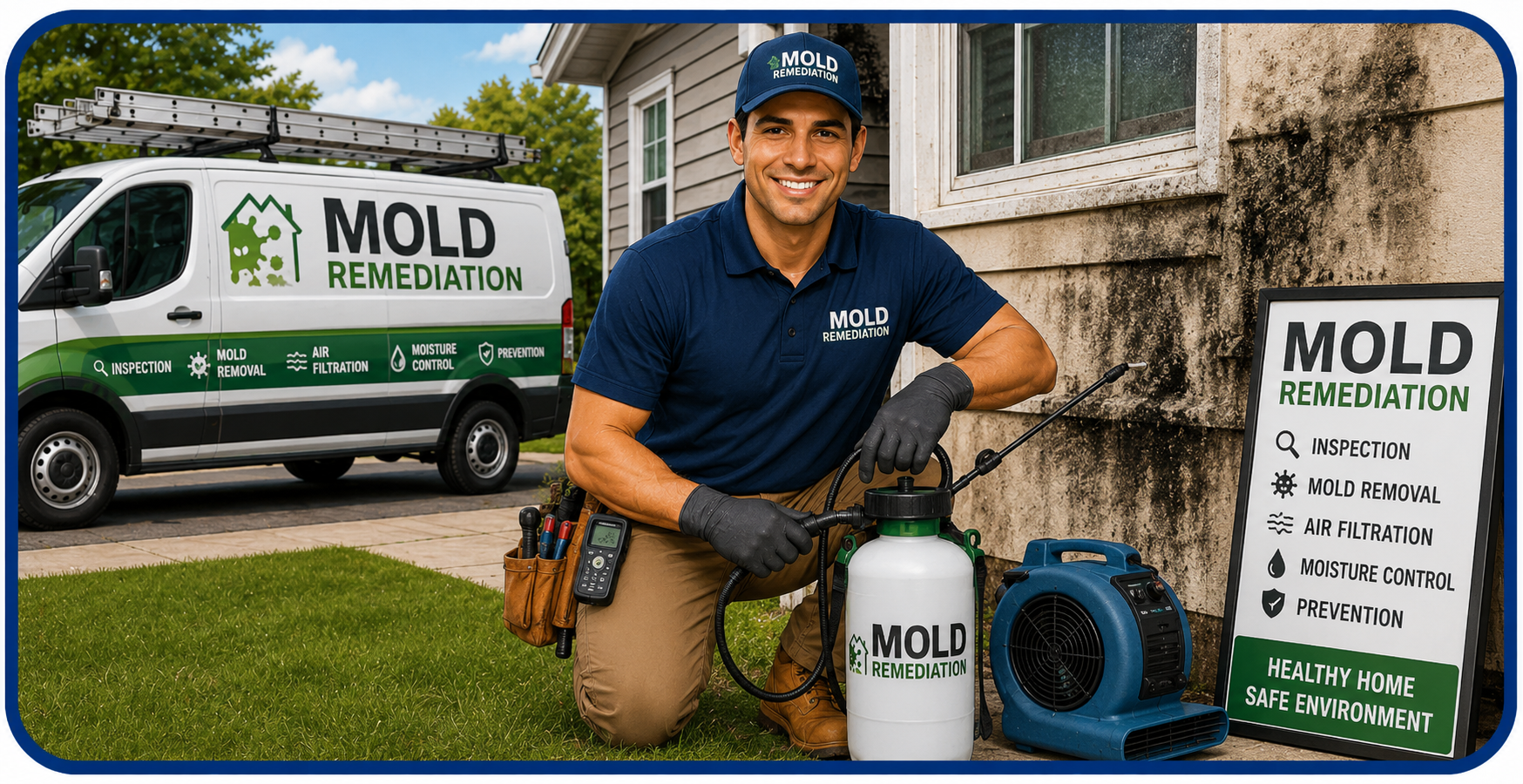
Basement mold in Marion grows because water does. Hydrostatic pressure through block walls, failed sump systems, condensation on cold concrete surfaces, and flooding events all create the chronic moisture that drives mold colonization below grade. 247 Mold Remediation addresses the moisture pathway alongside the contamination — so the remediation holds.
We do not remediate until we understand why the basement is wet. Our Marion technicians perform a full moisture assessment — including wall probe testing, floor slab readings, and drainage evaluation — before writing a remediation scope.
Every basement remediation in Marion produces a written scope, before-and-after photos, moisture readings, and a clearance test result. This documentation is accepted by insurance carriers and real estate parties operating in TX.
Stored items in basements are often directly affected. Our Marion crews handle contaminated materials safely, remove and dispose of unsalvageable contents per EPA guidelines, and remediate the structural surfaces without cross-contaminating the rest of the home.
Water intrusion in a Marion basement that has not been dried within 24-72 hours will produce active mold growth. We respond to flooding-related mold calls around the clock, 7 days a week — because waiting until Monday morning compounds the damage.
Basements in Marion properties are below-grade spaces subject to a set of moisture pressures that above-grade spaces simply do not experience. The fundamental physics is straightforward: soil holds water, saturated soil exerts hydrostatic pressure against foundation walls, and that pressure drives moisture migration through concrete block, poured concrete, or stone foundation material over time. When that moisture reaches the interior surface and the basement relative humidity allows it to remain rather than evaporate, the conditions for mold colonization are in place within 48-72 hours.
Concrete block walls are particularly vulnerable because the hollow cores of the blocks act as channels for water movement. Even when the surface appears dry, probe testing of block wall cavities in Marion basements frequently reveals moisture content well above the colonization threshold. This is why a visual inspection of a Marion basement understates the contamination problem — visible surface mold on block wall faces represents only the colonies that have developed on the accessible surface, while the block cores and framing members adjacent to the foundation often show elevated moisture and developing growth that is not visible without testing.
Professional remediation of a mold-affected Marion basement requires full containment of the work area from the rest of the living space with negative air pressure, HEPA filtration running continuously during the project to capture disturbed spore material, removal of all soft contents that cannot be decontaminated (drywall, insulation, carpet, cardboard), mechanical cleaning and EPA-registered antimicrobial treatment of all hard surfaces including the concrete wall and floor, and careful handling of any structural framing that has been affected by moisture contact. The containment protocol is non-negotiable — basement disturbance without containment pushes spore-laden air upward through the living space through any floor-level penetration or open stairwell.
The moisture source must be addressed as part of or immediately following remediation. A Marion basement that has been professionally remediated but still experiences water intrusion through the same pathway will re-colonize within one to two wet seasons. This may involve redirecting sump pump discharge further from the foundation, repairing failed or saturated perimeter drainage, improving exterior grading to direct surface water away from the foundation, or addressing HVAC condensate drainage issues that are adding moisture load to the space. We identify these sources during the initial assessment and include the findings in your written report — so you know exactly what needs to be addressed to protect your investment in remediation.
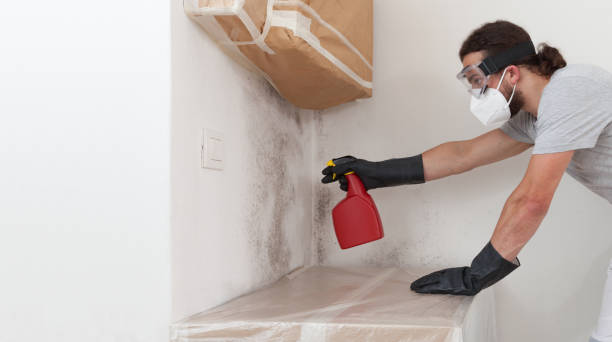
Full below-grade inspection with moisture probe testing of block walls, floor slab reading, drainage evaluation, and documentation of all contamination — identifying both visible and concealed mold in your Marion basement.
Mechanical cleaning and EPA-registered antimicrobial treatment of concrete block, poured concrete, and stone foundation walls affected by mold growth — including block core cleaning for cavity contamination in Marion properties.
Safe demolition and removal of mold-contaminated drywall, framing, insulation, and flooring in finished Marion basements, followed by structural remediation and documentation to support reconstruction and insurance claims.
Rapid-response water intrusion and mold remediation for Marion basements affected by flooding, sump failure, or drain backup — with 24/7 availability because timing matters when water has been in contact with building materials.
Independent air sampling and written clearance certificate after basement mold remediation is complete — confirming spore levels are within acceptable standards and providing documentation for your Marion property records.
Complete written documentation for Marion basement mold remediation: moisture assessment findings, remediation scope, photographic record, moisture source identification, and clearance certificate formatted for insurance and real estate use.
Assessment before action — every Marion basement job follows this sequence.
We probe-test foundation walls, read floor slab moisture, assess drainage, and document all contamination in your Marion basement before writing a scope. You receive an upfront price before any work begins.
The work area is sealed from the rest of your Marion home with polyethylene barriers and negative pressure HEPA filtration before any materials are disturbed — preventing spore migration to living areas during the project.
Contaminated soft materials are removed and disposed of, structural surfaces are mechanically cleaned and treated with EPA-registered antimicrobial, and block wall cavity contamination is addressed. Moisture source findings are documented.
Air sampling after containment removal confirms spore levels meet clearance standards. Your written clearance certificate and full documentation package are delivered for insurance and property records use in Marion, TX.
"Our block-wall basement in Marion had a serious mold problem after two consecutive wet winters. 247 Mold Remediation was the only company that actually tested the block wall cavities rather than just looking at the surface. They found contamination in the cores that would have been left behind by every other quote we got. The full remediation and clearance testing was done within four days and the air test came back clear."
"We had a finished basement that flooded during a heavy storm and sat wet for about 36 hours before we were able to get someone in. By the time 247 Mold Remediation arrived, the drywall was visibly colonized. They handled the demo, treated all the structural surfaces, and identified that our sump discharge was draining back toward the foundation. Their documentation was exactly what our insurance company needed."
"Selling our Marion home and the buyer's inspector flagged mold growth behind the utility room drywall. We called 247 Mold Remediation on a Thursday and they had a written scope, remediation complete, and clearance testing results back to us by Monday. Our real estate agent said the turnaround was the fastest she had seen and we closed on schedule."
Recurring mold in a Marion basement almost always means the moisture source has not been addressed. Cleaning visible mold from basement surfaces removes the colony you can see but does nothing about the conditions that created it. If your foundation walls are transmitting hydrostatic moisture, if your sump system is not keeping up with groundwater load, if your basement HVAC is creating condensation on cold surfaces, or if your drainage grading is directing surface water toward the foundation — the moisture will keep arriving and mold will keep colonizing. A professional moisture assessment identifies the specific pathway in your Marion property so it can be addressed, not just treated around.
Below-grade mold in a Marion home affects the air throughout the house because stack effect — the natural upward air movement in a building — continuously draws basement air upward into the living space. This means a mold problem in your basement is also an air quality problem on the floors above it. The specific health implications depend on which mold species are present, the spore concentrations reaching inhabited spaces, and the respiratory sensitivity of the occupants. The only way to objectively assess the air quality impact is through air sampling with laboratory analysis — and the only way to resolve it is through professional remediation that eliminates the source.
The cost of basement mold remediation in Marion varies significantly based on the extent of contamination, whether finished materials need to be removed, and the size of the affected area. A small unfinished area with surface contamination on block walls is a very different scope from a fully finished basement with contamination throughout the wall cavity and subfloor. We provide upfront pricing after the inspection — not ballpark figures over the phone that change when we see the actual job. Call +1-844-692-0486 to schedule an assessment for your Marion basement and receive a written quote before any commitment is made.
Mold remediation addresses the existing contamination but does not inherently fix the water entry problem — those are typically separate scopes. Our job on every Marion basement remediation is to identify the moisture source as part of the assessment, document it in the written findings, and communicate clearly what needs to be addressed to prevent recurrence. Depending on the cause, water mitigation may involve a waterproofing contractor, a plumber, a landscaping correction, or a drainage system upgrade. We give you the objective findings so you can make an informed decision about what follow-on work is needed to protect your investment in the remediation.
Under typical conditions, mold colonization on porous materials begins within 24-48 hours of sustained moisture contact. At 48-72 hours, active hyphal growth is underway on paper-faced drywall, wood framing, and carpet backing. By 72-96 hours in a humid environment, visible growth is typically present on multiple surface types. This is why response time matters — a Marion basement that flooded yesterday and has not been dried is not yet a mold remediation job in the same sense as one that sat wet for a week. Fast response can sometimes allow structural drying in place rather than demolition and replacement. Call +1-844-692-0486 as soon as water intrusion occurs in your Marion basement.
Call +1-844-692-0486 for certified Marion Basement Mold Remediation — moisture assessment, full remediation, and clearance testing with upfront pricing before work begins.